 PulseScore
You know what you said. PulseScore shows you what they heard.
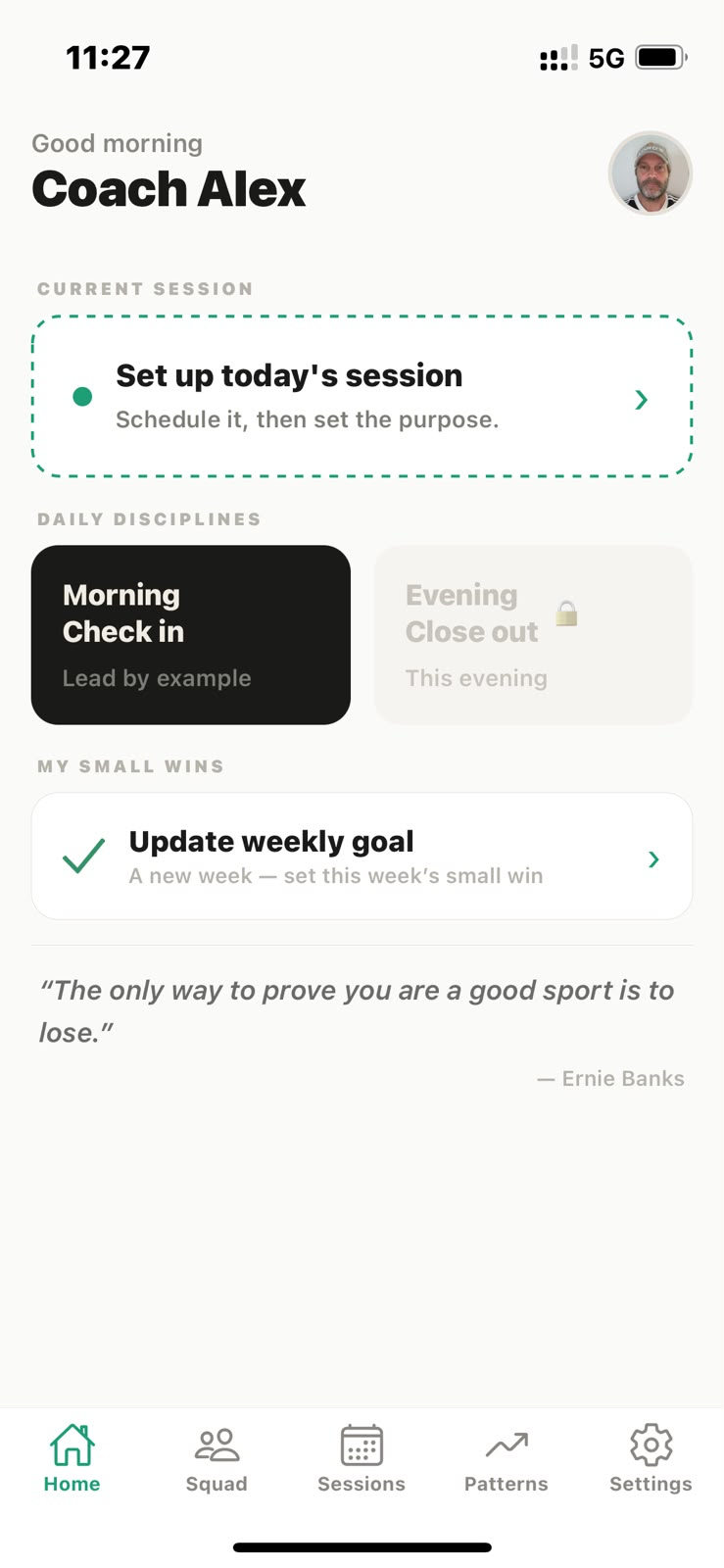
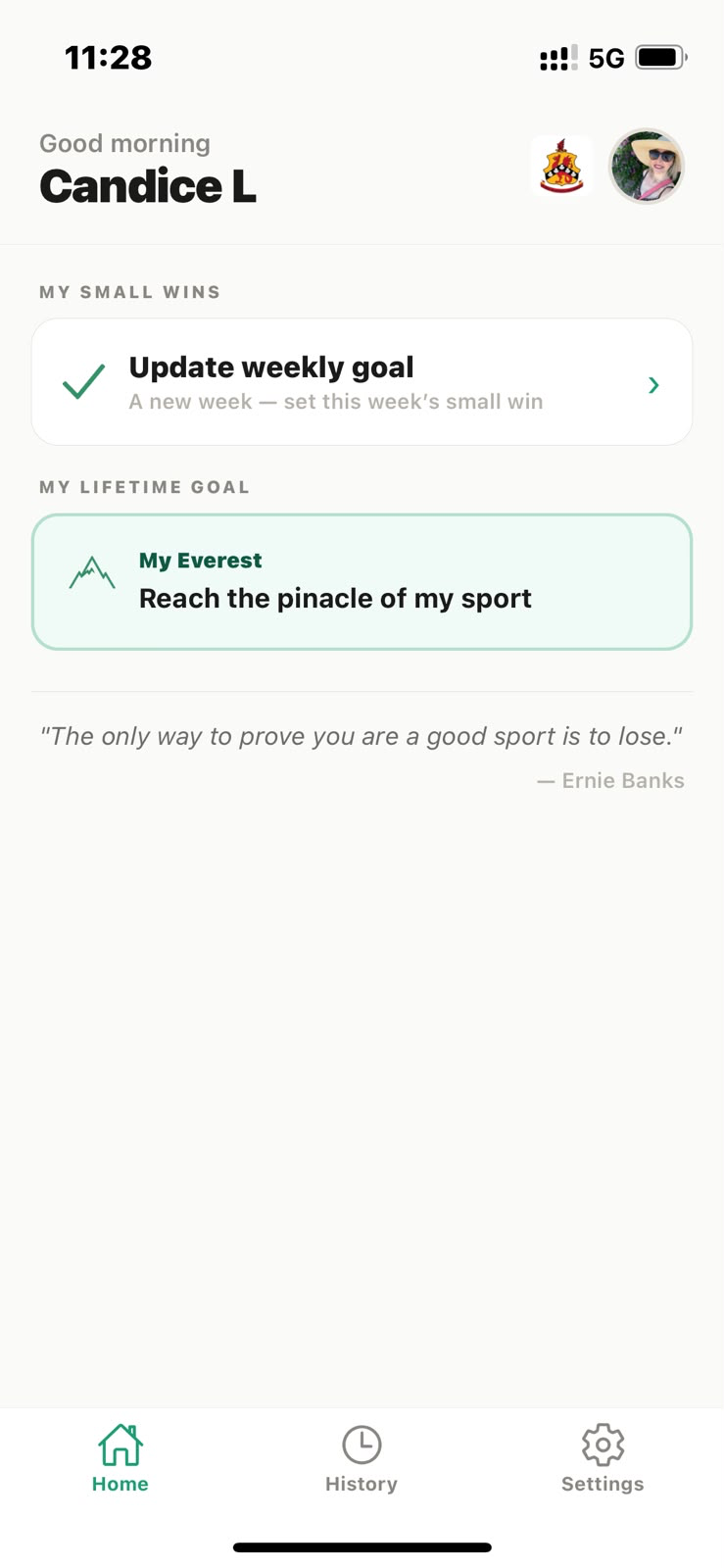
Set one goal for the session. Players check in before and after, by voice and sliders, in 90 seconds and anonymously. See who arrived ready to learn, what they took away, and how your coaching is landing.
- 90-second check-ins
- Anonymous to the coach
- Any team sport
Every coach has the same blind spot.
You plan the session and you deliver it. What you can't see is what each player actually took in. Usually you find out weeks later, in a match, or in a player who stops turning up.
- Players nod along, whether they got it or not.
- The quiet ones rarely tell you how they're really arriving.
- You get almost no honest feedback on your own coaching.
Great coaches read the room. PulseScore reads it with you.
One loop, every session.
Small, focused check-ins before and after training. Over a season they build a clear picture of how your team learns and how your coaching lands.
-
1
Before the session
You set the goal
One clear aim for the session, set in seconds and shared with the squad.
-
2
Before the session
Players check in
A few spoken words and two sliders. You see whether the team is arriving ready to take it in.
-
3
After the session
Players say what they took away
They recall the session goal in their own words and rate how it went.
-
4
After the session
You check in too
Your own reflection builds your baseline as a coach, session after session.
-
5
Before the next one
You see what landed
The team pattern, what's shifting over time, and where a conversation might help.
Why voice, not just another survey?
Players get tired of forms. Speaking for a few seconds is quicker, and it carries more than a number on a scale ever can.
PulseScore combines what players say, how they say it, and their slider answers. Each person is compared only with their own baseline, never with teammates, so changes stand out more clearly the longer you use it.
It measures you too, coach.
After every session your players tell you how it went. Over a season you see which sessions work, which messages stick, and where your coaching is improving.
- Other tools
- Track the players.
- PulseScore
- Tracks the players and you.
What you get
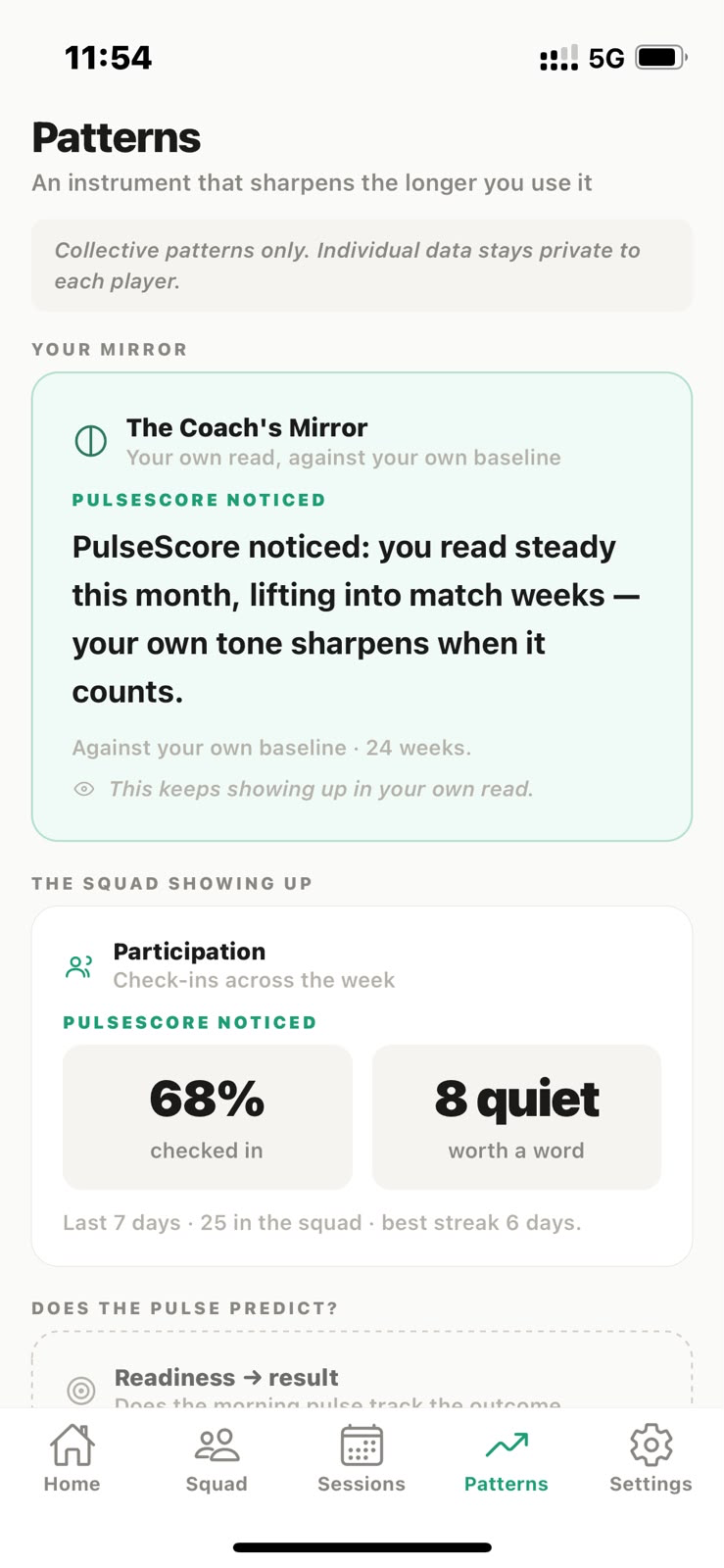
- Your mirror — whether your own energy is rising, easing, or lifting into match weeks, against your own normal.
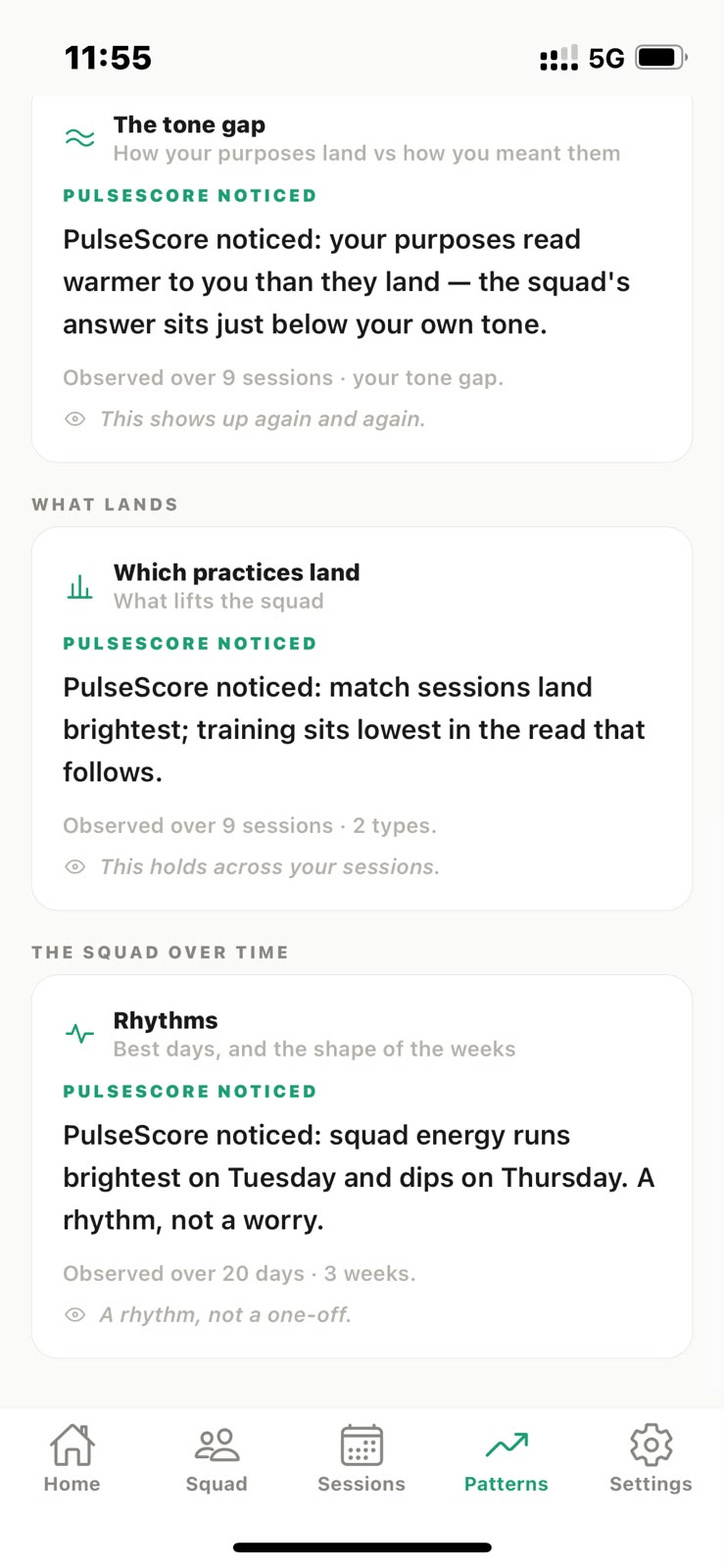
- Which practices land — which kinds of session lift the squad, and which sit flat.
- Which messages stick — how your tone sits against the squad's, and which land as you meant them.
- Who's gone quiet — who's drifted, with a gentle nudge for them. Never named.
- Whether readiness means anything — whether the morning pulse tracks how your sessions go.
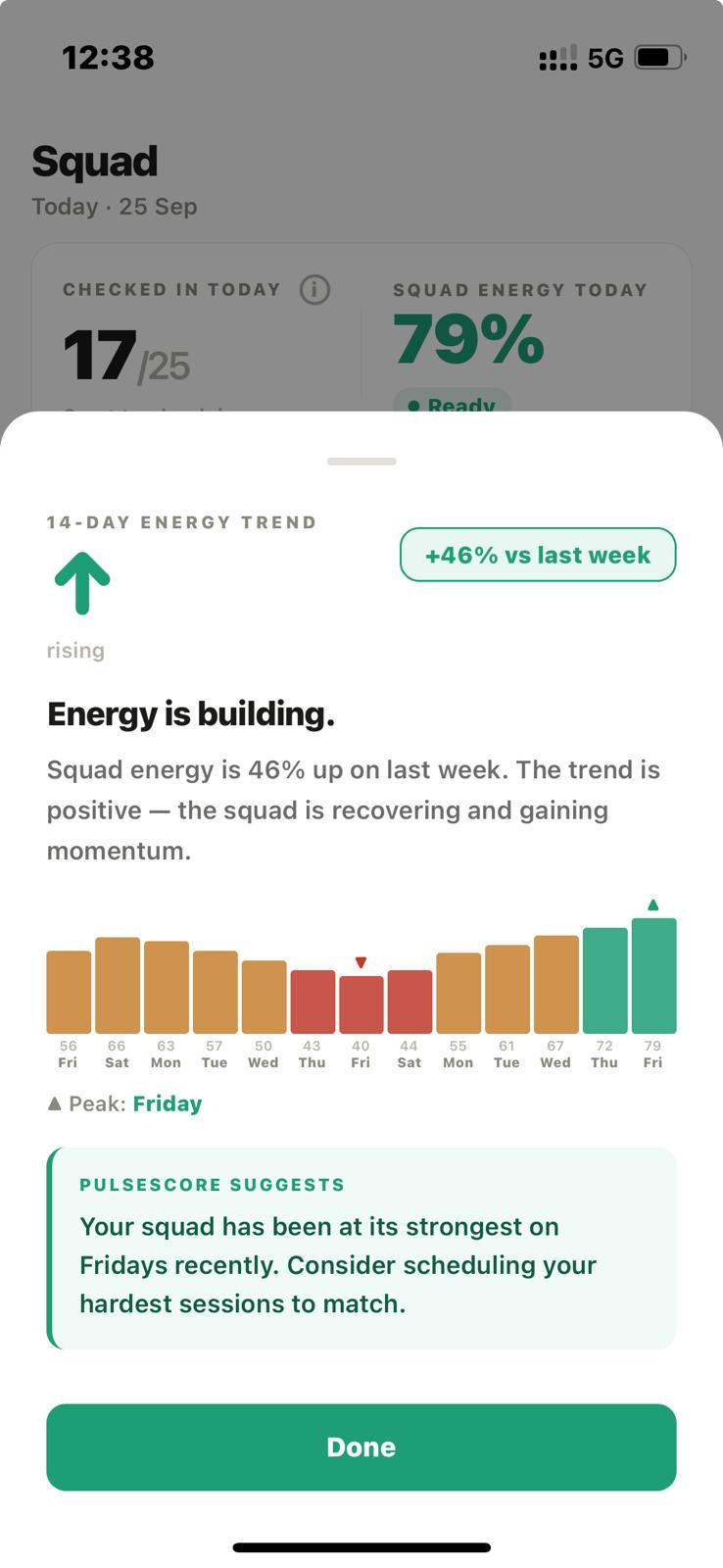
- Your squad's rhythm — the best days, and the shape of the weeks.
Each insight is earned before it shows, and sharpens the longer you use it. You always see the squad, never the individual.
Already use wearables? Keep them.
A wearable tells you how hard they worked. It can't tell you what they understood. PulseScore fills that gap and works alongside the kit you already use.
A wearable tells you
- How far and how fast they ran
- How hard their body worked
- How much load they're carrying
PulseScore tells you
- Whether they arrived ready to learn
- Whether the session goal got through
- How your coaching is landing over a season
Honest answers need a safe place.
Players only tell you the truth when they know it's safe to. So the coach never needs to know who said what to understand what's happening.
- A quick, private check-in
- Compared only with your own recent check-ins
- Never named, never ranked
- Ninety seconds, then back to training
Player"I can be honest."
PulseScoreCombines everyone's answers
CoachSees the team pattern
Players give explicit consent before their first check-in. PulseScore is designed for UK GDPR and treats voice data with the care it needs.
Questions coaches ask
You bring the coaching. PulseScore helps you see.
How long does a check-in take?
About 90 seconds. Players say a few words and move a couple of sliders, then get back to training.
Can the coach see what each player said?
No. PulseScore combines everyone's answers, so the coach sees the team pattern, not who said what. Each player is compared only with their own previous check-ins.
Why use voice as well as sliders?
A slider shows what someone chooses to tell you. Their voice adds how they say it. Together they give a fuller picture of how the team is arriving and what the session left behind.
Is PulseScore a wearable?
No. Wearables track physical output such as distance and heart rate. PulseScore tracks readiness, understanding and how sessions land, so it works alongside the kit you already use.
Which sports is PulseScore for?
Any sport where a coach works with a team or squad and needs players to take in and remember what is taught, from football, rugby and hockey to basketball, netball and martial arts clubs.
Does PulseScore coach my team for me?
No. It doesn't tell you what to think or what to do. It gives you another source of information, so your judgement is backed by evidence.
Is PulseScore a medical device?
No. PulseScore is a coaching and wellbeing tool. It doesn't diagnose, treat or predict any medical condition or injury.
See it with your own squad.
A founder will walk you through PulseScore live, on a call or at your club. We usually reply the same day.